Minibiotus intermedius
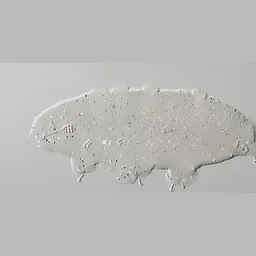
Minibiotus intermedius is a tardigrade in the genus Minibiotus (Macrobiotidae, Parachela), described by Plate in 1888. The parentheses around the authority mean it was first described in another genus.

Where it has been recorded
What we have read about it
Facts we extracted from the literature into our knowledge graph, each with the source and page it came from.
Includes populations recorded as Minibiotus gr. intermedius.
- The other vegetarian species have buccal tube diameters of 7–12% of tube length and stylet support insertion at 49–77% (A. granulatus 7–8%/62–65%; Minibiotus gr. intermedius 7–8%/49–54%; M. furcatus 10–12%/68–73%; Murrayon pullari and Dactylobiotus parthenogeneticus 10–12%/72–77%); Macrobiotus spp. (diet unknown) have 15–19% and 78–83%.Guidetti et al. 2012. Form and function of the feeding apparatus in Eutardigrada (Tardigrada). Zoomorphology. p129, Table 2
- The pharyngeal cuticular lining continues into the narrow cylindrical oesophagus, and folds at the pharynx–oesophagus transition work as a valve.Guidetti et al. 2012. Form and function of the feeding apparatus in Eutardigrada (Tardigrada). Zoomorphology. p136, first paragraph; Fig. 16g
- The buccal tube is a rigid cylinder whose diameter differs between species; it is straight in Milnesium cf. tardigradum and generally has an anterior-ventral bend in the parachelan species.Guidetti et al. 2012. Form and function of the feeding apparatus in Eutardigrada (Tardigrada). Zoomorphology. p130, 'Buccal tube'
- The cuticular eutardigrade buccal-pharyngeal apparatus can be divided into four parts, buccal ring, buccal tube, stylet system and pharynx, followed by the cuticle-lined oesophagus, all part of the foregut.Guidetti et al. 2012. Form and function of the feeding apparatus in Eutardigrada (Tardigrada). Zoomorphology. p130, Results 'Anatomy of the buccal–pharyngeal apparatus'; Fig. 1a (p131)
- In parachelans the anterior buccal tube is ventro-laterally surrounded by cuticular crests and laminae, named the buccal crown, which anchor the anterior ends of the stylet protractor muscles (M1 and M6); Milnesium lacks it.Guidetti et al. 2012. Form and function of the feeding apparatus in Eutardigrada (Tardigrada). Zoomorphology. p131 ('we propose the name “buccal crown”'); p141 Discussion 'Buccal tube'
- The buccal tube has four oval perforated areas with many ~0.1 µm holes, symmetrically on each side of the stylet sheaths (one dorsal and one ventral per side), through which sensory processes of the buccal sensory organs pass.Guidetti et al. 2012. Form and function of the feeding apparatus in Eutardigrada (Tardigrada). Zoomorphology. p131–132, 'oval perforated areas'; Figs 5d, e, 8e, 9e; p141 function
- In the parachelan species the stylet sheaths lie ventral to the buccal tube and the stylet furcae lateral to it, and the long piercing stylet (sword-shaped anterior tip, enlarged posterior end jammed in the furca) runs in a furrow between the ventral lamina and the ventral wall of the buccal tube.Guidetti et al. 2012. Form and function of the feeding apparatus in Eutardigrada (Tardigrada). Zoomorphology. p132–133, 'Stylet system'; Figs 7b, d, 9a, 10b, c, 12b, 14a
- The buccal tube ends inside a myoepithelial pharynx whose tripartite lumen has a thin cuticular lining; except in Milnesium, the lining bears three pharyngeal apophyses alternating with three rows of symmetrical placoids (2–3 macroplacoids and at most one, smallest and most caudal, microplacoid per row).Guidetti et al. 2012. Form and function of the feeding apparatus in Eutardigrada (Tardigrada). Zoomorphology. p135, 'Pharyngeal structures and esophagus'; Fig. 1a (p131)
- Each stylet consists of a continuous stylet coat, in which the traditional stylet sheath and stylet furca are joined by a very thin layer, enclosing a needle-like calcium carbonate piercing stylet; protractor pull on the furca pushes the piercing stylet out through the sheath hole into the mouth cavity, folding the coat.Guidetti et al. 2012. Form and function of the feeding apparatus in Eutardigrada (Tardigrada). Zoomorphology. p132, 'Stylet system'; Fig. 1b, c (p131); Figs 6c, 14b–d; p144–145 functional discussion
- The stylet support is a flexible cuticular structure joining the buccal tube to the arc between the two condyles of the stylet furca; in Milnesium cf. tardigradum it is short and triangular and can swing back up to 90° to lie along the buccal tube, whereas in parachelans it moves backward but never aligns with the tube, acting as a fulcrum for stylet movement.Guidetti et al. 2012. Form and function of the feeding apparatus in Eutardigrada (Tardigrada). Zoomorphology. p134, stylet support; Fig. 5f; p145 'the stylet support works as a fulcrum'
- The buccal ring bears six large lamellae on semilunar striated structures in Milnesium cf. tardigradum; ten lamellae in P. richtersi, the four Macrobiotus species, Murrayon pullari and Dactylobiotus parthenogeneticus; ten papulae in the two Minibiotus species; and a wide velum with a dorsoventrally compressed mouth and cuticular lips in R. coronifer and A. granulatus.Guidetti et al. 2012. Form and function of the feeding apparatus in Eutardigrada (Tardigrada). Zoomorphology. p130, 'Buccal ring and mouth'; Fig. 2a–d (p132)
- The buccal-pharyngeal apparatus was compared in 12 eutardigrade species from 8 genera (Apochela: Milnesium cf. tardigradum; Parachela: Paramacrobiotus richtersi, Macrobiotus sandrae, M. joannae, M. macrocalix, M. islandicus, Minibiotus gr. intermedius, M. furcatus, Adorybiotus granulatus, Richtersius coronifer, Murrayon pullari, Dactylobiotus parthenogeneticus), by LM (live or mounted) and SEM of hypochlorite-extracted or naturally discharged apparatuses; no Hypsibius species was examined.Guidetti et al. 2012. Form and function of the feeding apparatus in Eutardigrada (Tardigrada). Zoomorphology. p128, Table 1 and Materials and methods; p129 SEM preparation
- In the parachelan species, wider stylet furcae go with a wider buccal crown, because the same protractor muscles (M1 and M6) attach to both.Guidetti et al. 2012. Form and function of the feeding apparatus in Eutardigrada (Tardigrada). Zoomorphology. p142 ('the wider the stylet furcae the wider the buccal crown (Table 2)')
- Species with a longer ventral lamina have more strongly bent stylets (P. richtersi, Macrobiotus spp.), and the lamina guides the bent stylets; in R. coronifer and A. granulatus, with straighter stylets, the lamina is shorter.Guidetti et al. 2012. Form and function of the feeding apparatus in Eutardigrada (Tardigrada). Zoomorphology. p145 ('with longer ventral lamina, the stylets are more bent (Table 2)')
- Eutardigrades that suck fungi, bacteria or moss and lichen cell contents generally have a narrow, long buccal tube, stylet supports inserted more anteriorly, thick placoids with wide distal margins, large pharyngeal apophyses and stylet furcae, a large buccal crown and a ventro-anterior mouth; carnivores have a wide, relatively short buccal tube, a large pharynx without placoids or with thin placoids, and large buccal lamellae on a wide mouth ring.Guidetti et al. 2012. Form and function of the feeding apparatus in Eutardigrada (Tardigrada). Zoomorphology. p141–142, Discussion 'Relationships between diet and the anatomy of the feeding apparatus'; Table 2
Papers
17 works in our corpus of 5,137 tardigrade papers name it in the title or abstract (0 in the title), from 2002. This is by exact name match, so it misses papers that use an older name or only the genus.
- Tardigrades from Peru (South America), with descriptions of three new species of Parachela (2014, Zootaxa) doi
- Terrestrial Tardigrada of the Island of Barbados in the West Indies, with the Description ofMilnesium barbadosensesp. n. (Eutardigrada: Apochela: Milnesiidae) (2010, Caribbean Journal of Science) doi
- Notes on some tardigrades from South Africa, with the description of Diphascon (Diphascon) zaniewi sp. nov. (Eutardigrada: Hypsibiidae) (2004, Zootaxa) doi
- Tardigrades from Ecuador, with the Description of Two New Species: Mixibius ornatus n. sp. and Diphascon (Adropion) onorei n. sp. (Eutardigrada, Hypsibiidae) (2002, Studies on Neotropical Fauna and Environment) doi
- The Tardigrada of Southern Africa, with the Description ofMinibiotus harrylewisi, a New Species from KwaZulu-Natal, South Africa (Eutardigrada: Macrobiotidae) (2009, African Invertebrates) doi
- First record of Tardigrada from São Tomé (Gulf of Guinea, Western Equatorial Africa) and description of Pseudechiniscus santomensis sp. nov. (Heterotardigrada: Echiniscidae) (2010, Zootaxa) doi
Classification
| class | Eutardigrada |
|---|---|
| order | Parachela |
| superfamily | Macrobiotoidea |
| family | Macrobiotidae |
| genus | Minibiotus |
Changes: Redescribed and neotype (from Marburg, Germany) designated by Kaczmarek et al. 2022b (original type locality in Chile and Marburg, Germany).
Other species of Minibiotus: M. acontistus, M. aculeatus, M. africanus, M. allani, M. aquatilis, M. asteris, M. bernhardi, M. bisoctus, M. citlalium, M. claxtonae, M. constellatus, M. continuus, M. crassidens, M. decrescens, M. diphasconides, M. dispositus, M. diversus, M. eichhorni, M. ethelae, M. fallax, M. floriparus, M. formosus, M. furcatus, M. granatai, M. gumersindoi, M. harrylewisi, M. hispidus, M. hufelandioides, M. ioculator, M. jonesorum, M. julietae, M. keppelensis, M. lazzaroi, M. maculartus, M. marcusi, M. milleri, M. orthofasciatus, M. pentannulatus, M. pilatus, M. poricinctus, and 16 more.
Look it up
GBIF · NCBI Taxonomy · GenBank sequences · iNaturalist · Google Scholar
Classification, authority and notes: Degma & Guidetti 2026, Actual checklist of Tardigrada species, 45th edition (CC BY 4.0), which asks users also to cite Guidetti & Bertolani 2005 (Zootaxa 845: 1–46) and Degma & Guidetti 2007 (Zootaxa 1579: 41–53).
Records: GBIF.org, accessed 2026-09-20 through the GBIF API; each record belongs to the dataset that published it. The map shows only records released under CC0 or CC BY, with coordinates and no geospatial issue flag.
Papers: our corpus of tardigrade literature from OpenAlex.
How this is built
- Data
- Classification, authority and notes from Degma & Guidetti's 2026 world checklist. Records from GBIF, genomes and sequencing runs from NCBI, papers from our OpenAlex corpus of tardigrade literature, photos from Wikimedia Commons and iNaturalist (CC0 or CC BY), and facts from our knowledge graph, each with its source and page. A page shows only the parts we hold for that species.
- Built with
build_species.pywrites every species page from the checklist, joining each name by exact match to the other collections. Facts are ranked by confidence and evidence, and taken from each source in turn so no single paper fills the list. The records map is drawn as SVG from thinned GBIF coordinates.- Checked
- Only exact matches to accepted names bring in GBIF records, and fossil entries were read against their papers. The pages themselves are not tested against data.
- Limits
- Exact name matching misses papers and sequences filed under older names or only the genus. GBIF identifications are as their publishers made them. A short page means we hold little yet, not that little is known.
- More
- How the whole project is built