Macrobiotus hufelandi
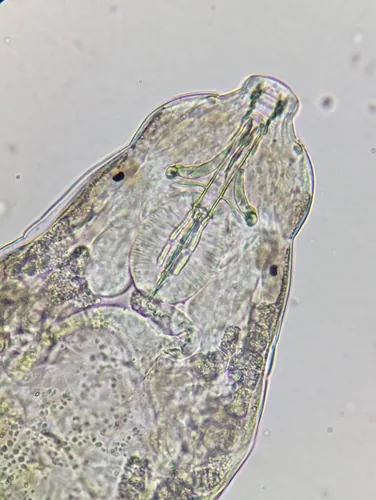
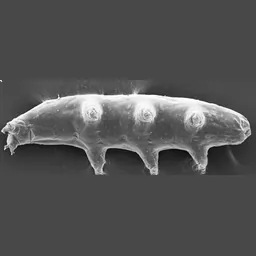
Macrobiotus hufelandi is a tardigrade in the genus Macrobiotus (Macrobiotidae, Parachela), described by C.A.S. Schultze in 1834.

Where it has been recorded
What we have read about it
Facts we extracted from the literature into our knowledge graph, each with the source and page it came from.
- Nuclei per ganglion vary within and between animals; in ten individuals ganglion 1 had the most (50-75 nuclei), ganglia 2 and 3 on average 28% fewer (45-50), and ganglion 4 55% fewer (15-30).Zantke et al. 2008. Three-dimensional reconstruction of the central nervous system of Macrobiotus hufelandi (Eutardigrada, Parachela): implications for the phylogenetic position of Tardigrada. Zoomorphology. p28 right col.
- Active walking disperses animals only short distances in wet conditions: Ramazzotti watched tardigrades crossing bark between moss patches in rain and measured speeds of about 12.6 cm/h for Hypsibius oberhaeuseri and 17.7 cm/h for Macrobiotus hufelandi on an agar film giving the claws good grip.Ramazzotti & Maucci 1983. Il Phylum Tardigrada, 3rd edition (English translation by C. W. Beasley, 1995: The Phylum Tardigrada). Memorie dell'Istituto Italiano di Idrobiologia 41; translation published by the translator, McMurry University, Abilene, Texas. pp. 119–120 (PDF pp. 119–120): "the speed with which they progress is about 12.6 cm/hr for Hypsibius oberhaeuseri and 17.7 cm/hr for M. hufelandi"
- In Echiniscus testudo the first ventral ganglion lies very close to the ventral cluster of the brain and is connected to the brain by two pairs of connectives: the inner connective runs into the dorsoventral cluster and on to the dorsal brain, and the outer connective runs outside the dorsoventral cluster, its termination not locatable. Like Zantke et al. 2008 in Macrobiotus hufelandi, the authors could not detect any connection between the first ventral ganglion and the ventral cluster with their antibody set, contrary to the arrangement Persson et al. 2012 describe for Halobiotus crispae, where the first ganglion joins a subpharyngeal ganglion by the ventral longitudinal nerve cord.Schulze & Schmidt-Rhaesa 2013. The architecture of the nervous system of Echiniscus testudo (Echiniscoidea, Heterotardigrada). Journal of Limnology. J Limnol 72(s1), pp48-49, Results and Discussion; Figs 6a,b
- Most H. crispae findings confirm Marcus 1929's description of Macrobiotus hufelandi, and support most of Zantke et al. 2008, while several structures declared missing or possibly misinterpreted by Zantke et al. are reported here.Persson et al. 2012. Neuroanatomy of Halobiotus crispae (Eutardigrada: Hypsibiidae): Tardigrade brain structure supports the clade Panarthropoda. Journal of morphology. p1238 left col. (Discussion, first para.)
- Ventral commissures within the trunk ganglia are present in both heterotardigrade and eutardigrade species, including Mesobiotus cf. harmsworthi and H. dujardini, and are therefore ancestral for Tardigrada; their absence in Macrobiotus hufelandi (Zantke et al. 2008) is the exception rather than the rule. Extra-ganglionic interpedal commissures are likewise present in H. dujardini, M. cf. harmsworthi, Paramacrobiotus richtersi and Echiniscus testudo, taxa spanning the basal split of Tardigrada, so they too are ancestral components of the tardigrade nervous system.Smith & Jockusch 2014. The metameric pattern of Hypsibius dujardini(Eutardigrada) and its relationship to that of other panarthropods. Frontiers in Zoology. Frontiers in Zoology 11:66, p12, Discussion
- Ventral connectives contain several non-homogeneous fibre bundles and are exclusively fibrous, lacking perikarya.Zantke et al. 2008. Three-dimensional reconstruction of the central nervous system of Macrobiotus hufelandi (Eutardigrada, Parachela): implications for the phylogenetic position of Tardigrada. Zoomorphology. p28 right col.; Figs 1a, 5b
- Egg shell processes (which may anchor eggs on moss) usually become visible only after laying, because in the ovary eggs and processes are flattened by pressure; eggs squeezed out of females often have distorted ornament. Macrobiotus hufelandi eggs appear sticky (groups of 2–8 glued together, or stuck to moss and resisting a needle); some aquatic Macrobiotus lay in empty cladoceran and ostracod shells.Ramazzotti & Maucci 1983. Il Phylum Tardigrada, 3rd edition (English translation by C. W. Beasley, 1995: The Phylum Tardigrada). Memorie dell'Istituto Italiano di Idrobiologia 41; translation published by the translator, McMurry University, Abilene, Texas. pp. 71–74 (PDF pp. 71–74): "These ornamentations usually become visible only after deposition of the eggs, since inside the ovary the eggs and their extensions are flattened, due to pressure on both sides."
- Table 1 aligns head structures across studies: H. crispae inner lobes (acl, pcl) = Marcus 1929 inner lobes = Zantke 2008 inner lobes (posterior cluster); outer lobes (acl, pcl) = Marcus outer lobes = Zantke outer lobes (dorsal cluster); preoral commissure and dorsal commissure = Zantke's; median ganglion = Marcus median ganglion (no Zantke entry); n12, n13 = Zantke n11, n12, n13; n4 = Zantke n4, n5, n6; ventrolateral lobes and subpharyngeal ganglion each = Zantke 'postoral commissure?'; g0 = Marcus subesophageal ganglion (I); outer connective in all columns; inner connective = Zantke's; papilla cephalica innervation = Zantke n7-n10; buccal neurons, ventral commissure, stylet commissure have no earlier equivalent.Persson et al. 2012. Neuroanatomy of Halobiotus crispae (Eutardigrada: Hypsibiidae): Tardigrade brain structure supports the clade Panarthropoda. Journal of morphology. p1240, Table 1 (CNS, head rows)
- Comparing their result with published descriptions, Smith & Jockusch conclude that a differentiated fourth ganglion is ancestral for Eutardigrada and probably for Tardigrada: the fourth ganglion is the most distinct in Halobiotus crispae (one transverse commissure against two in ganglia 1-3), the smallest and least populous in Macrobiotus hufelandi and Mesobiotus cf. harmsworthi, and in the heterotardigrade Echiniscus testudo the first and fourth ganglia are narrower than the second and third, which raises the possibility that the first was also differentiated ancestrally. RFamide immunostaining in M. cf. harmsworthi shows consistent morphological differences between all four ganglia.Smith & Jockusch 2014. The metameric pattern of Hypsibius dujardini(Eutardigrada) and its relationship to that of other panarthropods. Frontiers in Zoology. Frontiers in Zoology 11:66, p12, Discussion
- No brain centres corresponding to arthropod mushroom bodies, olfactory lobes or central body were found, in agreement with earlier TEM of M. hufelandi (Greven & Kuhlmann 1972).Zantke et al. 2008. Three-dimensional reconstruction of the central nervous system of Macrobiotus hufelandi (Eutardigrada, Parachela): implications for the phylogenetic position of Tardigrada. Zoomorphology. p30 left col.
- Most tardigrades feed on plant cell contents, piercing moss or algal cells with the stylets and sucking them out; also algae, fungi and detritus. Echiniscidae feed exclusively on moss chlorophyll cells. Milnesium tardigradum is perhaps the only normally (not exclusively) carnivorous species; its gut often holds bdelloid rotifer mastax (three in one animal). Macrobiotus richtersi and M. hufelandi sometimes take animal food; Diphascon bullatum from a Pallanza field had Scenedesmus in the gut.Ramazzotti & Maucci 1983. Il Phylum Tardigrada, 3rd edition (English translation by C. W. Beasley, 1995: The Phylum Tardigrada). Memorie dell'Istituto Italiano di Idrobiologia 41; translation published by the translator, McMurry University, Abilene, Texas. pp. 46–47 (PDF pp. 46–47): "Milnesium tardigradum is perhaps the only species which is normally, though not exclusively, carnivorous and one can fairly frequently observe specimens belonging to this species whose intestines contain mastax from bdelloid rotifers: I actually saw three in one tardigrade found in Austria."
- Table 1 trunk and PNS rows: four ventral trunk ganglia and longitudinal nerve cords in all studies; transverse commissures in Marcus 1929, Kristensen 1982 and Nielsen 2001 but not Zantke 2008; leg ganglia in Marcus and Zantke; leg nerves n2+n3 (this study) = Marcus n3 = Zantke n1, n2, n3; lateral nerves n1/ln = Marcus lateral nerves n1, n2; lateral neurons, dorsal nerves, dorsal neurons and cloacal nerves in Marcus; lateral longitudinal nerves new; Zantke 'neurophils of the hind legs'.Persson et al. 2012. Neuroanatomy of Halobiotus crispae (Eutardigrada: Hypsibiidae): Tardigrade brain structure supports the clade Panarthropoda. Journal of morphology. p1240, Table 1 (CNS trunk and PNS rows)
- The four paired ventral ganglia, joined by paired connectives, lie slightly anterior to their segmental appendages; their nuclei are bilaterally arranged with some unpaired nuclei.Zantke et al. 2008. Three-dimensional reconstruction of the central nervous system of Macrobiotus hufelandi (Eutardigrada, Parachela): implications for the phylogenetic position of Tardigrada. Zoomorphology. p28 right col. (The ventral ganglia); Fig. 1a (p24)
- In 1983 Macrobiotus hufelandi, Hypsibius oberhaeuseri and Milnesium tardigradum were regarded as cosmopolitan, recorded from the Arctic to the Antarctic, while other species were known from few or single localities; data were judged too scarce for sound biogeography.Ramazzotti & Maucci 1983. Il Phylum Tardigrada, 3rd edition (English translation by C. W. Beasley, 1995: The Phylum Tardigrada). Memorie dell'Istituto Italiano di Idrobiologia 41; translation published by the translator, McMurry University, Abilene, Texas. pp. 18–19 (PDF pp. 18–19): "Various species are cosmopolitan, for example Macrobiotus hufelandi, Hypsibius oberhaeuseri, Milnesium tardigradum, etc., which have been observed almost everywhere, from the Arctic to the Antarctic"
- The H. crispae ventral commissure may be equivalent to Zantke et al.'s postoral commissure; it was named 'ventral commissure' for its similarity to the ventral ring commissure of Echiniscus viridissimus (Dewel & Dewel 1996). The stylet commissure is dorsal to the buccal tube and should not be confused with the postoral commissure, which is ventral.Persson et al. 2012. Neuroanatomy of Halobiotus crispae (Eutardigrada: Hypsibiidae): Tardigrade brain structure supports the clade Panarthropoda. Journal of morphology. p1238 right col.; p1240 right col.
- There are two pairs of caudally directed lobes: outer dorsolateral lobes bearing the eyes, and more ventral inner lobes; a third unpaired posterior lobe described by Marcus 1929 was not detected.Zantke et al. 2008. Three-dimensional reconstruction of the central nervous system of Macrobiotus hufelandi (Eutardigrada, Parachela): implications for the phylogenetic position of Tardigrada. Zoomorphology. p23 right col.; p30 left col. ('could not detect the third unpaired posterior lobe'); Figs 1c, 2e
Showing 16 of 59, taking the best-supported facts from each source in turn.
Open questions
- Do transverse commissures form, even transiently, in the trunk ganglia of tardigrade embryos?Posed by Zantke et al. 2008. Three-dimensional reconstruction of the central nervous system of Macrobiotus hufelandi (Eutardigrada, Parachela): implications for the phylogenetic position of Tardigrada. Zoomorphology. p. 33: "Whether segmental commissures are transiently formed during embryonic development is unknown."
Genomes and sequencing
Raw sequencing data
11 runs (49.4 Gb) in 1 projects: 11 Hi-C. Browse them in the SRA.
Papers
69 works in our corpus of 5,137 tardigrade papers name it in the title or abstract (17 in the title), from 1959. This is by exact name match, so it misses papers that use an older name or only the genus.
- A revision of the Macrobiotus hufelandi group (Tardigrada, Macrobiotidae), with some observations on the taxonomic characters of eutardigrades (1993, Zoologica Scripta) doi
- The Macrobiotus hufelandi group (Tardigrada) revisited (2017, Zootaxa) doi
- New multilocus phylogeny reorganises the family Macrobiotidae (Eutardigrada) and unveils complex morphological evolution of the Macrobiotus hufelandi group (2020, Molecular Phylogenetics and Evolution) doi
- DNA barcoding and integrative taxonomy of Macrobiotus hufelandi C.A.S. Schultze 1834, the first tardigrade species to be described, and some related species (2011, Zootaxa) doi
- Three-dimensional reconstruction of the central nervous system of Macrobiotus hufelandi (Eutardigrada, Parachela): implications for the phylogenetic position of Tardigrada (2007, Zoomorphology) doi
- Taxonomy and biogeography of tardigrades using an integrated approach: new results on species of the Macrobiotus hufelandi group (2011, Invertzool) doi
Classification
| class | Eutardigrada |
|---|---|
| order | Parachela |
| superfamily | Macrobiotoidea |
| family | Macrobiotidae |
| genus | Macrobiotus |
Synonyms: Macrobiotus schultzei Greeff, 1866 according to Marcus 1928.
Other species of Macrobiotus: M. acadianus, M. almadai, M. alvaroi, M. anderssoni, M. andinus, M. anemone, M. annae, M. annewintersae, M. anshui, M. ariekammensis, M. artipharyngis, M. ascensionis, M. azzunae, M. basiatus, M. birendrai, M. biserovi, M. brevipes, M. caelestis, M. canaricus, M. carsicus, M. caymanensis, M. crustulus, M. dalaticus, M. dariae, M. deceptor, M. denticulus, M. diversus, M. dolosus, M. drakensbergi, M. dulciporus, M. echinogenitus, M. engbergi, M. evelinae, M. excelsus, M. fontourai, M. gemmatus, M. glebkai, M. halophilus, M. hannae, M. hibiscus, and 99 more.
Look it up
GBIF · NCBI Taxonomy · GenBank sequences · iNaturalist · Google Scholar
Classification, authority and notes: Degma & Guidetti 2026, Actual checklist of Tardigrada species, 45th edition (CC BY 4.0), which asks users also to cite Guidetti & Bertolani 2005 (Zootaxa 845: 1–46) and Degma & Guidetti 2007 (Zootaxa 1579: 41–53).
Records: GBIF.org, accessed 2026-09-20 through the GBIF API; each record belongs to the dataset that published it. The map shows only records released under CC0 or CC BY, with coordinates and no geospatial issue flag.
Sequence data: NCBI Assembly, Nucleotide and SRA, searched September 2026.
Papers: our corpus of tardigrade literature from OpenAlex.
How this is built
- Data
- Classification, authority and notes from Degma & Guidetti's 2026 world checklist. Records from GBIF, genomes and sequencing runs from NCBI, papers from our OpenAlex corpus of tardigrade literature, photos from Wikimedia Commons and iNaturalist (CC0 or CC BY), and facts from our knowledge graph, each with its source and page. A page shows only the parts we hold for that species.
- Built with
build_species.pywrites every species page from the checklist, joining each name by exact match to the other collections. Facts are ranked by confidence and evidence, and taken from each source in turn so no single paper fills the list. The records map is drawn as SVG from thinned GBIF coordinates.- Checked
- Only exact matches to accepted names bring in GBIF records, and fossil entries were read against their papers. The pages themselves are not tested against data.
- Limits
- Exact name matching misses papers and sequences filed under older names or only the genus. GBIF identifications are as their publishers made them. A short page means we hold little yet, not that little is known.
- More
- How the whole project is built