Isohypsibius dastychi
Isohypsibius dastychi is a tardigrade in the genus Isohypsibius (Isohypsibiidae, Parachela), described by Pilato, Bertolani & Binda in 1982.
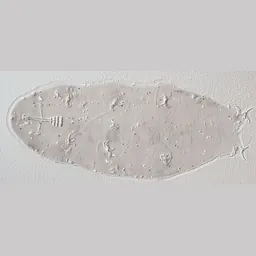
Where it has been recorded
What we have read about it
Facts we extracted from the literature into our knowledge graph, each with the source and page it came from.
- In Isohypsibius dastychi (gonochoric) age at first oviposition was 44.9 ± 6.5 days at 12 °C and 28.2 ± 4.6 days at 20 °C; hatching time 13.1 ± 1.5 and 7.6 ± 1.1 days; hatching success 80.0% and 66.0%.Altiero T, Suzuki AC, Rebecchi L 2018. Reproduction, Development and Life Cycles. In: Schill RO (ed.) Water Bears: The Biology of Tardigrades. Zoological Monographs 2, pp. 211–248 p. 238, Table 8.2 (ref. 20 = Bingemer et al. 2016)
- Evo 2's training data lists five tardigrade nuclear assemblies from NCBI: H. dujardini GCA_001579985.1 (strain Sciento, 182 Mb), R. varieornatus Rvar_4.0, P. metropolitanus GCF_019649055.1, P. richtersi GCA_034698045.1 and I. dastychi GCA_034696485.1; and three tardigrade mitochondrial genomes (H. dujardini, Thulinius sp., R. varieornatus). The card does not say how much of each genome was sampled: eukaryotic data went in as mRNAs, stitched 5 kb windows and, in the long-context phase, tagged whole genomes.OpenGenome2, the training data of Evo 2 (Arc Institute): dataset card and species_metadata.csv species_metadata.csv rows with phylum Tardigrada; dataset card, Data Sources and Training Data Composition
- In Isohypsibius dastychi the male holds the female with his first pair of legs and the female stimulates him by moving her stylets and contracting the pharynx; sperm is ejaculated through the male cloaca; the female develops eggs during her third moult and waits inside the exuvia, and if mating does not occur the eggs are resorbed.Altiero T, Suzuki AC, Rebecchi L 2018. Reproduction, Development and Life Cycles. In: Schill RO (ed.) Water Bears: The Biology of Tardigrades. Zoological Monographs 2, pp. 211–248 pp. 230–231, §8.5
Genomes and sequencing
Genome assemblies
| Accession | Name | Level | Released | Scaffold N50 (bp) |
|---|---|---|---|---|
| GCA_034696485.1 | ASM3469648v1 | Contig | 2023-12-27 | 577 |
Raw sequencing data
1 runs (11.2 Gb) in 1 projects: 1 WGS. Browse them in the SRA.
Papers
2 works in our corpus of 5,137 tardigrade papers name it in the title or abstract (2 in the title), from 2016. This is by exact name match, so it misses papers that use an older name or only the genus.
- First detailed observations on tardigrade mating behaviour and some aspects of the life history ofIsohypsibius dastychiPilato, Bertolani & Binda 1982 (Tardigrada, Isohypsibiidae) (2016, Zoological Journal of the Linnean Society) doi
- Experimental investigations on the partner-finding behaviour of Isohypsibius dastychi (Isohypsibiidae: Tardigrada) (2019, Zoological Journal of the Linnean Society) doi
Classification
| class | Eutardigrada |
|---|---|
| order | Parachela |
| superfamily | Isohypsibioidea |
| family | Isohypsibiidae |
| genus | Isohypsibius |
Other species of Isohypsibius: I. arbiter, I. archangajensis, I. arcuatus, I. barbarae, I. borkini, I. brulloi, I. cambrensis, I. campbellensis, I. canadensis, I. ceciliae, I. changbaiensis, I. chiarae, I. condorcanquii, I. coulsoni, I. damxungensis, I. gilvus, I. glazovi, I. hadzii, I. jakieli, I. jingshanensis, I. jinhouensis, I. liae, I. macrodactylus, I. marcellinoi, I. palmai, I. panovi, I. pauper, I. prosostomus, I. pseudundulatus, I. reticulatus, I. sabellai, I. schaudinni, I. sellnicki, I. solidus, I. taibaiensis, I. tuberculatus, I. undulatus, I. verrucosus, I. verrucosus, I. wilsoni, and 1 more.
Look it up
GBIF · NCBI Taxonomy · GenBank sequences · iNaturalist · Google Scholar
Classification, authority and notes: Degma & Guidetti 2026, Actual checklist of Tardigrada species, 45th edition (CC BY 4.0), which asks users also to cite Guidetti & Bertolani 2005 (Zootaxa 845: 1–46) and Degma & Guidetti 2007 (Zootaxa 1579: 41–53).
Records: GBIF.org, accessed 2026-09-20 through the GBIF API; each record belongs to the dataset that published it. The map shows only records released under CC0 or CC BY, with coordinates and no geospatial issue flag.
Sequence data: NCBI Assembly, Nucleotide and SRA, searched September 2026.
Papers: our corpus of tardigrade literature from OpenAlex.
How this is built
- Data
- Classification, authority and notes from Degma & Guidetti's 2026 world checklist. Records from GBIF, genomes and sequencing runs from NCBI, papers from our OpenAlex corpus of tardigrade literature, photos from Wikimedia Commons and iNaturalist (CC0 or CC BY), and facts from our knowledge graph, each with its source and page. A page shows only the parts we hold for that species.
- Built with
build_species.pywrites every species page from the checklist, joining each name by exact match to the other collections. Facts are ranked by confidence and evidence, and taken from each source in turn so no single paper fills the list. The records map is drawn as SVG from thinned GBIF coordinates.- Checked
- Only exact matches to accepted names bring in GBIF records, and fossil entries were read against their papers. The pages themselves are not tested against data.
- Limits
- Exact name matching misses papers and sequences filed under older names or only the genus. GBIF identifications are as their publishers made them. A short page means we hold little yet, not that little is known.
- More
- How the whole project is built