Halobiotus crispae
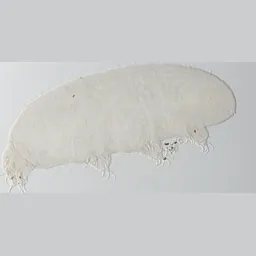
Halobiotus crispae is a tardigrade in the genus Halobiotus (Halobiotidae, Parachela), described by Kristensen in 1982.
Where it has been recorded
What we have read about it
Facts we extracted from the literature into our knowledge graph, each with the source and page it came from.
- Six buccal lamellae surround the mouth opening (SEM), with cilia visible in TEM section.Persson et al. 2012. Neuroanatomy of Halobiotus crispae (Eutardigrada: Hypsibiidae): Tardigrade brain structure supports the clade Panarthropoda. Journal of morphology. Fig. 4A-B caption (p1233)
- In Echiniscus testudo the first ventral ganglion lies very close to the ventral cluster of the brain and is connected to the brain by two pairs of connectives: the inner connective runs into the dorsoventral cluster and on to the dorsal brain, and the outer connective runs outside the dorsoventral cluster, its termination not locatable. Like Zantke et al. 2008 in Macrobiotus hufelandi, the authors could not detect any connection between the first ventral ganglion and the ventral cluster with their antibody set, contrary to the arrangement Persson et al. 2012 describe for Halobiotus crispae, where the first ganglion joins a subpharyngeal ganglion by the ventral longitudinal nerve cord.Schulze & Schmidt-Rhaesa 2013. The architecture of the nervous system of Echiniscus testudo (Echiniscoidea, Heterotardigrada). Journal of Limnology. J Limnol 72(s1), pp48-49, Results and Discussion; Figs 6a,b
- Tardigrade embryonic development is rapid: about 4 days in H. exemplaris, up to 14 days in Halobiotus crispae.Treffkorn et al. 2022. Review of extra-embryonic tissues in the closest arthropod relatives, onychophorans and tardigrades. Philosophical transactions of the Royal Society of London. Series B, Biological sciences. p. 2, section 2
- Eutardigrade newborns resemble adults apart from smaller size, immature gonad, and slight differences in claws and buccal apparatus (sometimes also immature eyespots and Malpighian tubules, as in Halobiotus crispae).Altiero T, Suzuki AC, Rebecchi L 2018. Reproduction, Development and Life Cycles. In: Schill RO (ed.) Water Bears: The Biology of Tardigrades. Zoological Monographs 2, pp. 211–248 p. 233, §8.7.2
- Internal organs (gonad and ducts, Malpighian tubules, hindgut) are suspended by ligaments and muscles attached to the integument. Eutardigrades have fine, radially arranged longitudinal gut muscles running from the oesophagus–midgut junction to the hindgut region, anchored by attachment plaques to the gut epithelium; these seem absent in heterotardigrades. Reported numbers: six in Halobiotus crispae, eight in Milnesium tardigradum and Hypsibius sp., 13 in Ramazzottius oberhaeuseri.Møbjerg et al. 2018. Morphology and Functional Anatomy. Zoological Monographs / Water Bears: The Biology of Tardigrades. p. 83, 2.6.2 'Visceral musculature'
- The tardigrade median brain lobe is paired (Persson et al. 2012, 2014).Martin et al. 2017. The nervous and visual systems of onychophorans and tardigrades: learning about arthropod evolution from their closest relatives. Journal of comparative physiology. A, Neuroethology, sensory, neural, and behavioral physiology. p574 left col.
- Halobiotus crispae has about 1060 somatic cells: 1058 +/- 53 from staining of four male specimens.Møbjerg N, Halberg KA, Jørgensen A, Persson D, Bjørn M, Ramløv H, Kristensen RM 2011. Survival in extreme environments - on the current knowledge of adaptations in tardigrades. Acta Physiol 202:409-420 search summary: "The total number of somatic cells in H. crispae was estimated at approximately 1060, based on stainings of four male specimens (mean +/- SD: 1058 +/- 53)."
- Smith & Jockusch propose that the horseshoe-shaped ventral brain lobe of H. dujardini is directly homologous both to the subesophageal ganglion and to the paired ventral lobes described for Halobiotus crispae by Persson et al. 2012: the ventral body of the horseshoe lies where the subesophageal ganglion is reported, and its branches lie where the paired ventral lobes are. They extend the same reading to the subesophageal ganglion and third brain lobe of the heterotardigrade Actinarctus doryphorus, and conclude that the ancestor of Eutardigrada, and probably of Tardigrada, had outer, inner and ventral brain lobes. They did not detect a discrete subesophageal ganglion.Smith & Jockusch 2014. The metameric pattern of Hypsibius dujardini(Eutardigrada) and its relationship to that of other panarthropods. Frontiers in Zoology. Frontiers in Zoology 11:66, pp11-12, Discussion 'Nervous system anatomy of H. dujardini and its relationship to that of other tardigrade species'
- A very pronounced nerve, n4, runs between the anterior cluster of the inner lobe and the dorsal commissure.Persson et al. 2012. Neuroanatomy of Halobiotus crispae (Eutardigrada: Hypsibiidae): Tardigrade brain structure supports the clade Panarthropoda. Journal of morphology. p1233 right col.; Fig. 5A (p1234)
- Active life span of tardigrades has been estimated at 18–30 months (Ramazzotti and Maucci 1983); the longest laboratory record is 518 days (ca. 17 months) in a clonal strain of Paramacrobiotus fairbanksi, and 18 months is reported for the pseudosimplex 1 stage of Halobiotus crispae (Kristensen 1982).Altiero T, Suzuki AC, Rebecchi L 2018. Reproduction, Development and Life Cycles. In: Schill RO (ed.) Water Bears: The Biology of Tardigrades. Zoological Monographs 2, pp. 211–248 p. 235, §8.9.1
- In Halobiotus crispae legs I–III of each side have 13, 10 and 9 muscles and leg IV only 3 (Halberg et al. 2009a).Møbjerg et al. 2018. Morphology and Functional Anatomy. Zoological Monographs / Water Bears: The Biology of Tardigrades. p. 82, 2.6.1
- Tardigrade eyes retain a connection to the epidermal layer (Kristensen 1983).Martin et al. 2017. The nervous and visual systems of onychophorans and tardigrades: learning about arthropod evolution from their closest relatives. Journal of comparative physiology. A, Neuroethology, sensory, neural, and behavioral physiology. p583 left col.
- Comparing their result with published descriptions, Smith & Jockusch conclude that a differentiated fourth ganglion is ancestral for Eutardigrada and probably for Tardigrada: the fourth ganglion is the most distinct in Halobiotus crispae (one transverse commissure against two in ganglia 1-3), the smallest and least populous in Macrobiotus hufelandi and Mesobiotus cf. harmsworthi, and in the heterotardigrade Echiniscus testudo the first and fourth ganglia are narrower than the second and third, which raises the possibility that the first was also differentiated ancestrally. RFamide immunostaining in M. cf. harmsworthi shows consistent morphological differences between all four ganglia.Smith & Jockusch 2014. The metameric pattern of Hypsibius dujardini(Eutardigrada) and its relationship to that of other panarthropods. Frontiers in Zoology. Frontiers in Zoology 11:66, p12, Discussion
- The outer lobes, inner lobes, median ganglion and their commissures constitute the dorsal part of the brain.Persson et al. 2012. Neuroanatomy of Halobiotus crispae (Eutardigrada: Hypsibiidae): Tardigrade brain structure supports the clade Panarthropoda. Journal of morphology. p1235 left col.
- Halobiotus crispae has about 1060 somatic cells on average, up to a third of them in the head (Møbjerg et al. 2011); about 1000 cells have been reported for Hypsibius exemplaris (Koutsovoulos et al. 2016). Mature oocytes are the largest cells, and midgut and Malpighian tubule initial-segment cells are especially large somatic cells.Møbjerg et al. 2018. Morphology and Functional Anatomy. Zoological Monographs / Water Bears: The Biology of Tardigrades. p. 63, 2.1.1, final paragraph
- A subpharyngeal ganglion lies ventrally in the tardigrade head (Marcus 1929; Persson et al. 2012, 2014).Martin et al. 2017. The nervous and visual systems of onychophorans and tardigrades: learning about arthropod evolution from their closest relatives. Journal of comparative physiology. A, Neuroethology, sensory, neural, and behavioral physiology. p574 right col.
Showing 16 of 55, taking the best-supported facts from each source in turn.
Open questions
- Which parts of the three-lobed brain model of Persson et al. 2012 correspond to the preoral and post-oral commissures seen in every tardigrade species examined with beta-tubulin?Posed by Smith et al. 2017. A Hypothesis for the Composition of the Tardigrade Brain and its Implications for Panarthropod Brain Evolution. Integrative and comparative biology. ICB 2017 p9: "It is unclear what parts of their model correspond to the pre- and post-oral commissures identified in our study"
Genomes and sequencing
Raw sequencing data
4 runs (242.6 Gb) in 1 projects: 4 Hi-C. Browse them in the SRA.
Papers
14 works in our corpus of 5,137 tardigrade papers name it in the title or abstract (7 in the title), from 1996. This is by exact name match, so it misses papers that use an older name or only the genus.
- Neuroanatomy of Halobiotus crispae (Eutardigrada: Hypsibiidae): Tardigrade brain structure supports the clade panarthropoda (2012, Journal of Morphology) doi
- Myoanatomy of the marine tardigrade Halobiotus crispae (Eutardigrada: Hypsibiidae) (2009, Journal of Morphology) doi
- Studies on the morphology and ultrastructure of the Malpighian tubules of Halobiotus crispae Kristensen, 1982 (Eutardigrada) (1996, Zoological Journal of the Linnean Society) doi
- Ecology and thermal tolerance of the marine tardigradeHalobiotus crispae(Eutardigrada: Isohypsibiidae) (2013, Marine Biology Research) doi
- The first record of a rare marine tardigrade, Halobiotus crispae Kristensen, 1982 (Eutardigrada: Hypsibiidae), from the Svalbard Archipelago (2011, Polar Biology) doi
- Do eutardigrades have a copulatory organ? The case of Halobiotus crispae Kristensen, 1982 (Tardigrada: Halobiotidae) (2025, Invertzool) doi
Classification
| class | Eutardigrada |
|---|---|
| order | Parachela |
| superfamily | Isohypsibioidea |
| family | Halobiotidae |
| genus | Halobiotus |
Changes: Amended by Tumanov et al. 2026.
Other species of Halobiotus: H. appelloefi, H. arcturulius, H. geddesi, H. stenostomus.
Look it up
GBIF · NCBI Taxonomy · GenBank sequences · iNaturalist · Google Scholar
Classification, authority and notes: Degma & Guidetti 2026, Actual checklist of Tardigrada species, 45th edition (CC BY 4.0), which asks users also to cite Guidetti & Bertolani 2005 (Zootaxa 845: 1–46) and Degma & Guidetti 2007 (Zootaxa 1579: 41–53).
Records: GBIF.org, accessed 2026-09-20 through the GBIF API; each record belongs to the dataset that published it. The map shows only records released under CC0 or CC BY, with coordinates and no geospatial issue flag.
Sequence data: NCBI Assembly, Nucleotide and SRA, searched September 2026.
Papers: our corpus of tardigrade literature from OpenAlex.
How this is built
- Data
- Classification, authority and notes from Degma & Guidetti's 2026 world checklist. Records from GBIF, genomes and sequencing runs from NCBI, papers from our OpenAlex corpus of tardigrade literature, photos from Wikimedia Commons and iNaturalist (CC0 or CC BY), and facts from our knowledge graph, each with its source and page. A page shows only the parts we hold for that species.
- Built with
build_species.pywrites every species page from the checklist, joining each name by exact match to the other collections. Facts are ranked by confidence and evidence, and taken from each source in turn so no single paper fills the list. The records map is drawn as SVG from thinned GBIF coordinates.- Checked
- Only exact matches to accepted names bring in GBIF records, and fossil entries were read against their papers. The pages themselves are not tested against data.
- Limits
- Exact name matching misses papers and sequences filed under older names or only the genus. GBIF identifications are as their publishers made them. A short page means we hold little yet, not that little is known.
- More
- How the whole project is built