Acutuncus antarcticus
Acutuncus antarcticus is a tardigrade in the genus Acutuncus (Acutuncidae, Parachela), described by Richters in 1904. The parentheses around the authority mean it was first described in another genus.
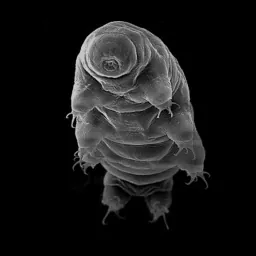
Where it has been recorded
What we have read about it
Facts we extracted from the literature into our knowledge graph, each with the source and page it came from.
- Total fibres in legs I–IV (ventral + lateral + dorsal groups): Milnesium cf. tardigradum 12, 13, 13, 4; Acutuncus antarcticus 14, 13, 13, 5; Bertolanius volubilis 11, 11, 12, 6; Paramacrobiotus richtersi and Dactylobiotus parthenogeneticus 10, 11, 12, 5; Echiniscus testudo 9, 10, 11, 4. Only the ventral group was resolved in Batillipes bullacaudatus (5, 6, 6, 3).Marchioro et al. 2013. Somatic musculature of Tardigrada: phylogenetic signal and metameric patterns. Zoological Journal of the Linnean Society. Table 3 pp. 595–596, rows 'Total fibres within each leg'
- Table 8.2 row for Acutuncus antarcticus at 15 °C (Tsujimoto et al. 2015): life span 69.2 ± 36.4 days, maximum 162, first oviposition 9.3 ± 1.1 days, 1–10 eggs per clutch, 7.5 ovipositions and 34.4 ± 22.6 eggs per animal, hatching success 97.6%, hatching time 8.5 ± 0.7 days, parthenogenetic.Altiero T, Suzuki AC, Rebecchi L 2018. Reproduction, Development and Life Cycles. In: Schill RO (ed.) Water Bears: The Biology of Tardigrades. Zoological Monographs 2, pp. 211–248 p. 238, Table 8.2 (ref. 19 = Tsujimoto et al. 2015)
- Proven diets by genus: algae for Diphascon, Isohypsibius, Acutuncus, Ramazzottius, Thulinius and Dactylobiotus; rotifers and/or nematodes for Milnesium adults with algae for juveniles; rotifers and algae for Hypsibius and Mesobiotus; nematodes and algae or rotifers and algae for Macrobiotus; nematodes, rotifers and algae for Paramacrobiotus.Degma P 2018. Field and Laboratory Methods. In: Schill RO (ed.) Water Bears: The Biology of Tardigrades. Zoological Monographs 2, pp. 349–370 pp. 355–356, §14.3
- Acutuncus antarcticus from moss collected in Antarctica in 1983 and stored at −20 °C for 30.5 years: two animals recovered and one egg developed; one revived animal and the hatchling reproduced repeatedly.Tsujimoto et al. 2016. Recovery and reproduction of an Antarctic tardigrade retrieved from a moss sample frozen for over 30 years. Cryobiology 72:78–81. abstract; Hengherr S, Schill RO 2018. Environmental Adaptations: Cryobiosis. In: Schill RO (ed.) Water Bears: The Biology of Tardigrades. Zoological Monographs 2, pp. 295–310 p. 299 (PDF p. 301)
- The dorsal region of each leg receives fibres only from the dorsal group, the ventral region from all three groups. Legs I–III have similar fibre numbers (e.g. Bertolanius volubilis: three ventral, two lateral, six or seven dorsal per leg). Leg IV has only two attachment points, P1 and P2, reached by two or three fibres: one or two dorsal (to P2) and one lateral (to P1).Marchioro et al. 2013. Somatic musculature of Tardigrada: phylogenetic signal and metameric patterns. Zoological Journal of the Linnean Society. pp. 592–596, 'General remarks on leg musculature'; Table 3
- Ramazzottius varieornatus protocol: 35 or 90 mm plastic dishes with Bacto agar 1.5% in Milli-Q or Volvic water; commercial Chlorella vulgaris (Chlorella Industry Co., Tokyo) diluted ca. 1:100 in Volvic added to 1–2 mm depth; 20–25 °C. Acutuncus antarcticus is cultured well by the same method at 5–15 °C.Altiero T, Suzuki AC, Rebecchi L 2018. Reproduction, Development and Life Cycles. In: Schill RO (ed.) Water Bears: The Biology of Tardigrades. Zoological Monographs 2, pp. 211–248 p. 242, §8.9.4
- Eutardigrade muscle architecture is more complex than heterotardigrade: eutardigrade attachment points mostly serve four to nine fibres (generally more than three), whereas those of Echiniscus testudo serve one or two; E. testudo has fewer but the thickest fibres seen in tardigrades, its two dorsal strands merged for most of their length and no interlongitudinal muscles.Marchioro et al. 2013. Somatic musculature of Tardigrada: phylogenetic signal and metameric patterns. Zoological Journal of the Linnean Society. p. 584 'Tardigrade musculature'; p. 593 'Dorsal muscle group'; p. 600 Discussion
- Table 8.2 row for Acutuncus antarcticus at 14 °C (Altiero et al. 2015): life span 88.8 ± 20.0 days, maximum 130, first oviposition 17.1 ± 3.6 days, 1.8 ± 0.8 eggs per clutch, 6.4 ± 1.0 ovipositions and 13.0 ± 3.7 eggs per animal, hatching success 67.1 ± 22.7%, hatching time 8.8 ± 2.6 days, parthenogenetic.Altiero T, Suzuki AC, Rebecchi L 2018. Reproduction, Development and Life Cycles. In: Schill RO (ed.) Water Bears: The Biology of Tardigrades. Zoological Monographs 2, pp. 211–248 p. 238, Table 8.2 (ref. 18 = Altiero et al. 2015)
- In eutardigrades the lateral group has two crossing longitudinal strands, one of six fibres (J-m+d, m+d–l, l-k+e, k+e-h+f, h+f-g2, g2-χ) running the whole body and one of four (H-n+c, n+c-m+d, m+d-k+e, k+e-h+f), with seven lateral nodes alternating uneven (n+c, l, i, g1+g2) and even (m+d, k+e, h+f). Echiniscus testudo has a single meandering strand of three thicker fibres.Marchioro et al. 2013. Somatic musculature of Tardigrada: phylogenetic signal and metameric patterns. Zoological Journal of the Linnean Society. pp. 589, 591, 'Lateral muscle group'; Figs 3–7; Table 2 p. 594
- Seven large nodes lie on the ventral midline, uneven A, C, E, G and even B, D, F. Node A always sends two fibres to the ventral region of leg I (A-LIc, A-LId); each even node sends one fibre to the previous leg and one to the following leg, except F which lacks the forward one. A-LIc is the only fibre that crosses the midline, crossing its partner from the other side in all species.Marchioro et al. 2013. Somatic musculature of Tardigrada: phylogenetic signal and metameric patterns. Zoological Journal of the Linnean Society. pp. 583, 586, 'Ventral muscle group'; Figs 8–9; Table 3
- In every species studied two ventral longitudinal strands per side (inner and outer) run from the head to leg IV. In eutardigrades each strand has six fibres (outer a-J, J-K, K-L, L-M, M-N, N-O; inner H*-H, H-K, K-L, L-M, M-N, N-O); in parachelans the strands are fused between O and K, in Milnesium cf. tardigradum only between K–L and M–N. Echiniscus testudo has four fibres per strand, fused between K and L.Marchioro et al. 2013. Somatic musculature of Tardigrada: phylogenetic signal and metameric patterns. Zoological Journal of the Linnean Society. pp. 583, 586–587, 'Ventral muscle group'; Table 2 p. 594; Fig. 8
- Serial homologies give a clear metameric pattern in all three muscle groups. Ventral group: four sets of serially homologous points (A, C, E, G; B, D, F; L, M, O; H, LIa, LIIa, LIIIa). Lateral group: two (even h+f, k+e, m+d; uneven n+c, l, i, g1+g2). Eutardigrade dorsal group: three (7, 11, ηa; 6, 10, λ; 5+4, 8+9, 12+13). Body segments 3 and 4 (legs II and III, counting a one-segment head) show the strongest pattern; the head and segment 5 (leg IV) the weakest.Marchioro et al. 2013. Somatic musculature of Tardigrada: phylogenetic signal and metameric patterns. Zoological Journal of the Linnean Society. pp. 596–597, 'Metameric patterns'; p. 600 'Musculature metamerism in tardigrades'; Figs 6–8, 12
- Tardigrade somatic muscles form three almost independent groups, ventral, lateral and dorsal, each of longitudinal strands plus transverse muscles; circular muscles are absent. Dorsal and lateral groups lie right under the epidermis, the ventral group over the nerve cords and ganglia. The groups meet only anteriorly at ventral node J, posteriorly at dorsal point χ, and inside the legs; transverse fibres β–J and 1–J link dorsal and ventral groups in all species studied.Marchioro et al. 2013. Somatic musculature of Tardigrada: phylogenetic signal and metameric patterns. Zoological Journal of the Linnean Society. pp. 583–584, Results 'Tardigrade musculature'; p. 592 'Dorsal muscle group'; Figs 3–7
- The dorsal group has an inner and an outer longitudinal strand per side. In eutardigrades the inner strand always has five fibres, the outer five to nine, joined by six to eight interlongitudinal muscles; the left and right dorsal groups touch at point α in Parachela but not in Apochela or Echiniscoidea. Eutardigrades have 16–24 dorsal attachment points, Echiniscus 9 and Batillipes 13. A transverse fibre from θ descends to the anus or cloaca, and in eutardigrades two sagittal fibres from π insert in the cloaca region.Marchioro et al. 2013. Somatic musculature of Tardigrada: phylogenetic signal and metameric patterns. Zoological Journal of the Linnean Society. pp. 591–593, 'Dorsal muscle group'; p. 599 Discussion; Table 2 p. 594; Figs 3–7
Genomes and sequencing
Raw sequencing data
40 runs (366.7 Gb) in 2 projects: 39 RNA-Seq, 1 FL-cDNA. Browse them in the SRA.
Papers
36 works in our corpus of 5,137 tardigrade papers name it in the title or abstract (11 in the title), from 2004. This is by exact name match, so it misses papers that use an older name or only the genus.
- Genetic diversity and biogeography of the south polar water bear Acutuncus antarcticus (Eutardigrada : Hypsibiidae) – evidence that it is a truly pan-Antarctic species (2016, Invertebrate Systematics) doi
- Life history traits and reproductive mode of the tardigrade Acutuncus antarcticus under laboratory conditions: strategies to colonize the Antarctic environment (2015, Hydrobiologia) doi
- Will the Antarctic tardigrade Acutuncus antarcticus be able to withstand environmental stresses due to global climate change? (2017, Journal of Experimental Biology) doi
- Molecular and morphological analysis of an Antarctic tardigrade, Acutuncus antarcticus (2013, Journal of Limnology) doi
- Life history of the Antarctic tardigrade, Acutuncus antarcticus, under a constant laboratory environment (2015, Polar Biology) doi
- Effect of lifespan and age on reproductive performance of the tardigrade Acutuncus antarcticus: minimal reproductive senescence (2016, Hydrobiologia) doi
Classification
| class | Eutardigrada |
|---|---|
| order | Parachela |
| superfamily | Hypsibioidea |
| family | Acutuncidae |
| genus | Acutuncus |
Synonyms: Hypsibius simoizumii Sudzuki, 1964.
Other species of Acutuncus: A. giovanniniae, A. mariae, A. mecnuffi.
Look it up
GBIF · NCBI Taxonomy · GenBank sequences · iNaturalist · Google Scholar
Classification, authority and notes: Degma & Guidetti 2026, Actual checklist of Tardigrada species, 45th edition (CC BY 4.0), which asks users also to cite Guidetti & Bertolani 2005 (Zootaxa 845: 1–46) and Degma & Guidetti 2007 (Zootaxa 1579: 41–53).
Records: GBIF.org, accessed 2026-09-20 through the GBIF API; each record belongs to the dataset that published it. The map shows only records released under CC0 or CC BY, with coordinates and no geospatial issue flag.
Sequence data: NCBI Assembly, Nucleotide and SRA, searched September 2026.
Papers: our corpus of tardigrade literature from OpenAlex.
How this is built
- Data
- Classification, authority and notes from Degma & Guidetti's 2026 world checklist. Records from GBIF, genomes and sequencing runs from NCBI, papers from our OpenAlex corpus of tardigrade literature, photos from Wikimedia Commons and iNaturalist (CC0 or CC BY), and facts from our knowledge graph, each with its source and page. A page shows only the parts we hold for that species.
- Built with
build_species.pywrites every species page from the checklist, joining each name by exact match to the other collections. Facts are ranked by confidence and evidence, and taken from each source in turn so no single paper fills the list. The records map is drawn as SVG from thinned GBIF coordinates.- Checked
- Only exact matches to accepted names bring in GBIF records, and fossil entries were read against their papers. The pages themselves are not tested against data.
- Limits
- Exact name matching misses papers and sequences filed under older names or only the genus. GBIF identifications are as their publishers made them. A short page means we hold little yet, not that little is known.
- More
- How the whole project is built